
What happens in a coaching session?
While I don’t’ share the specifics of client conversations, I would like to offer you glimpses of how I work with clients, through Walk & Talks, image prompts and working through realisations over time.
Walk & Talk
When we can, one of my favourite ways to coach is to walk and talk. I know it works for many of my clients too.
Locations and times vary, and I have a few favourite spots I offer that are highly conducive to coaching conversations.
The environment plays a major role. Maybe it’s a bridge, water, a change in the path, our pace, or something we notice along the way that becomes part of the picture. At times, where we find ourselves and what the client is exploring come together in ways neither of us could have planned. This serendipitous part can be as profound as anything we intentionally create. This is the art of being present and knowing when to step back and when to step forward.
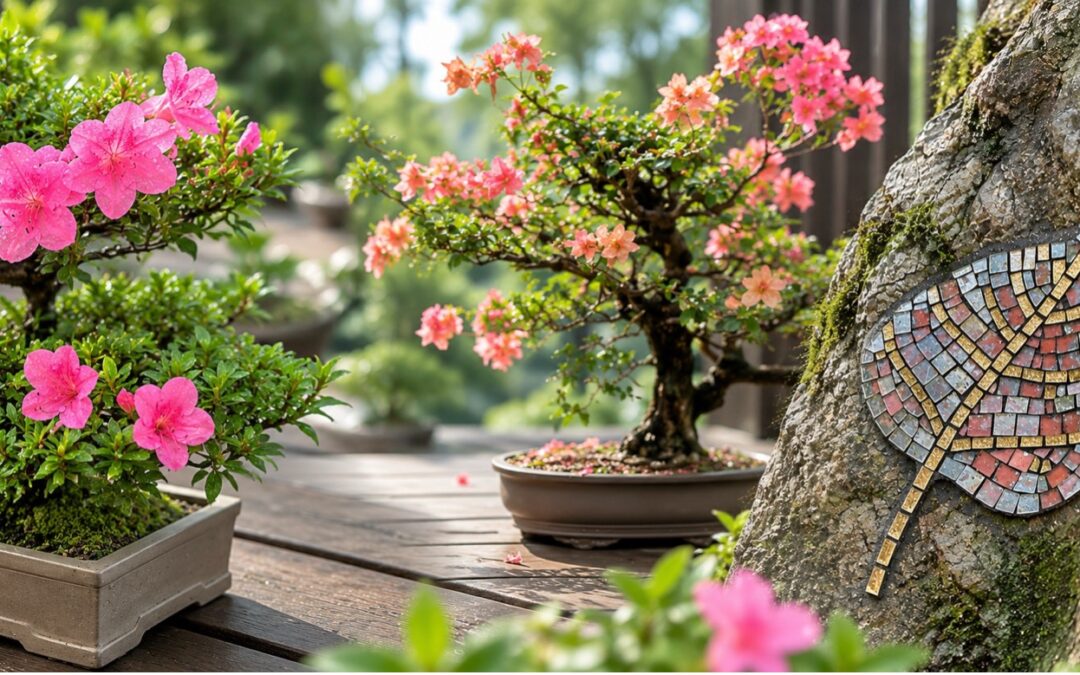
At Mt Coot-tha Gardens or Kuta, known as the place of wild honey by the Turrbal and Jagera peoples, we often find our way to the Japanese Garden and Bonsai House. The skill, artistry and underlying philosophy at the heart of bonsai offer a creative foreground for mindfulness, reflection and wonder, with room to appreciate constraints, impermanence and patience, which are so often at the heart of change and transition.
Coaching happens in much the same way. It’s not about shaping another person; it’s the shaping of the conversation between coach and client. It’s the art of being present, listening, noticing, offering a question, and creating space for different perspectives, possibility and choices to emerge.
This same desire for a creative, transformative landscape draws me to art galleries as spaces for coaching conversations. One of my favourite locations is the Queensland Art Gallery. There are so many ways to engage in such a beautiful space, standing before a painting, observing a sculpture or simply sitting in the architecture. Art and space open our inner worlds and offer new angles.
Like the bonsai garden, the gallery isn’t merely a backdrop. It’s a live energy, another partner in the dialogue.
Coaching Across Distance
Walking and talking isn’t always possible. I also work virtually with clients. Distance may change the setting, but not the possibility of a meaningful coaching experience.
With some clients, we work with Maverick Minds’ digital Artful Inquiry images, accessed on their own mobile devices. I offer questions shaped by what I understand of their context, what we’ve been exploring and where the conversation has reached. The client engages with the image in a reflective, often storytelling way.
An image can hold a story or a feeling a client hasn’t found words for yet. They may be drawn to one without knowing why or find themselves returning to it as part of a sense-making process.
What the client sees and says shapes where the conversation goes next.
One client described the experience as helping them to “dissect, examine, and reframe situations from fresh perspectives, uncovering insights I wouldn’t have reached on my own”.
Images are just one possibility. Stories, journalling, quotes and music can shape a coaching conversation too. Sometimes a question continues between sessions. A client notices something, writes it down and returns with another thread that continues to inform their thinking and ways of being. The next conversation can begin where we left off, or a new pathway can emerge, much like a walk in the gardens. And then we may find ourselves circling back and retracing part of the previous path.
Coaching Over Time
Another client came to coaching during a period they described as a “huge career change”. Over time, and through coaching, they described being able to “reformulate my ideas about myself and my work” and emerge with “a clearer roadmap and set of priorities”. They also spoke about accessing strengths they already possessed but may have doubted or had forgotten.
The ‘over time’ part matters. Sometimes things just take time.
But there’s always a shift. Sometimes it’s small and iterative. A feeling, an image or a story shows up and influences what comes next.
During coaching, we may circle an issue or a question for a while. This isn’t necessarily about being stuck. Sometimes the question itself is still forming. A client may begin with one question and, through the conversation, realise they are asking something else, even if they can’t yet fully articulate what that is.
We return to it. Something else happens between sessions. The situation presents itself from another angle. What felt opaque begins to take a different shape.
Sometimes the shift isn’t so gradual. Clear insights and knowing can happen swiftly. The right question, the right timing, the right connection and, aha, what has been difficult to see becomes vivid and catalysing.
William Bridges, known for his Bridges Transition Model, made a distinction between change and transition: change is situational and external, while transition is the internal psychological process people go through as they adjust to change.
I see this regularly in coaching. The external change for a person may have already happened, while internally they are still catching up and processing what it means for them. Even when change is desired and actively sought, rather than thrust upon us, it can raise all sorts of feelings, from excitement to anxiety.
Coaching helps with that catching up, whether that space is held for individuals or for teams.
When external change happens faster than we do, rather than speed up, we need permission and space to slow down, catch our breath and let our internal state calibrate.
If you or your team are navigating a situational shift, partnering with a coach can provide valuable support. Get in touch and let’s find the space and pace that works best for you.