
The capabilities needed to think, collaborate, and work well are shaped directly by the environments where we ask people to use them.
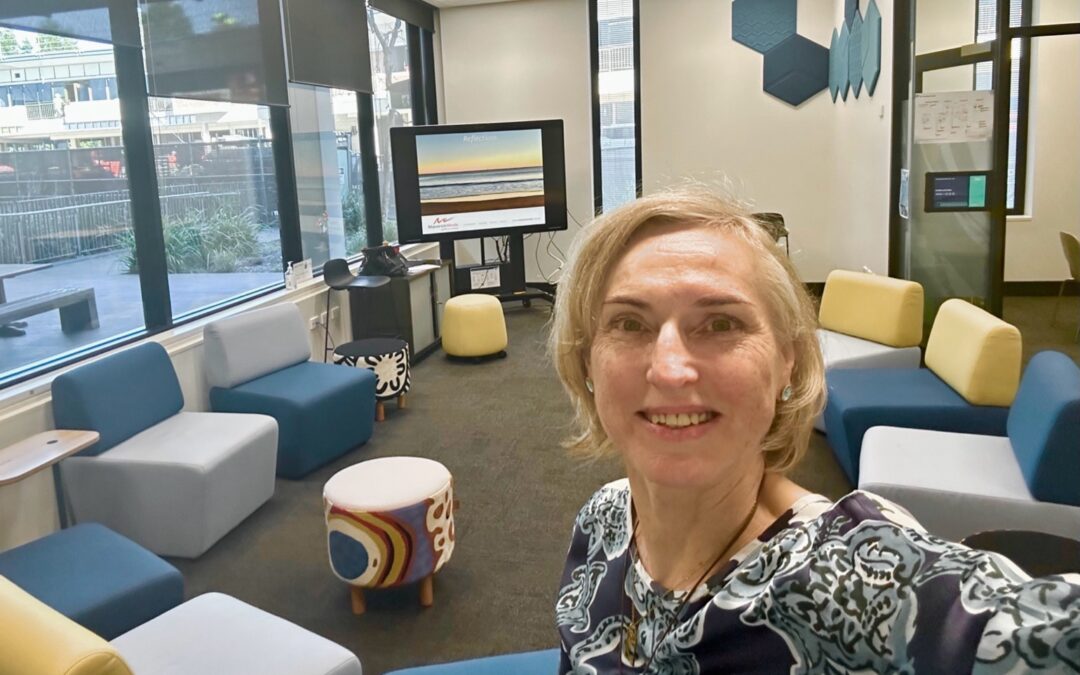
Recently, I shared a LinkedIn post about something many facilitators know well: arriving at a venue and discovering the room is not what you expected.
Despite prior requests and conversations, there can still be an element of surprise. Tables and chairs are arranged differently. Technology is unfamiliar. Furniture occupies more room than anticipated or simply doesn’t move! Over the years, I’ve learned to arrive early. Photos and videos can be helpful, but they never quite replace being in the space itself.
It’s when I’m standing in the room that I start to get a sense of how our time together might work. What needs to move? Where will people gather? What conversations and connections am I hoping the space will support? Usually, there is some sort of rearranging to do. Furniture gets moved. Plans get adjusted. The room evolves.
In the online discussion that followed the post, other facilitators talked deeply about learning environments. They spoke about creating spaces that communicate, “You matter.”
They discussed emotional safety, sensory needs, belonging, and participation. One person spoke about stewarding a classroom, so the space itself becomes a pedagogical tool. Another reflected on designing with the most vulnerable person in the room in mind.
Back in the room, with the new team I mentioned earlier, the reality was much more practical.
Because of the timing, we had to move the furniture together. Informal conversations started naturally as we worked out how to set up the room and what was needed for our time together.
We created a circle. At first, people were a little uncomfortable, prompting a few jokes. I said lightly that people have been meeting in circles forever. The group settled into it. By changing that physical layout, we created the conditions for deeper connection and conversations.
This experience, alongside the online discussion, reminded me that space is never just a backdrop. It shapes how we connect, participate, learn, and contribute.
That’s why we changed the layout. We weren’t moving furniture or disrupting for the sake of it. The disruption was in service of connection, learning, and possibility, and being intentional in how we create the conditions for what we hope will happen next.
A question for you to consider:
Consider the next physical room or virtual environment you find yourself in or creating for others. What does that configuration communicate to the people entering it, and what small change would create better conditions for connection and conversation?