
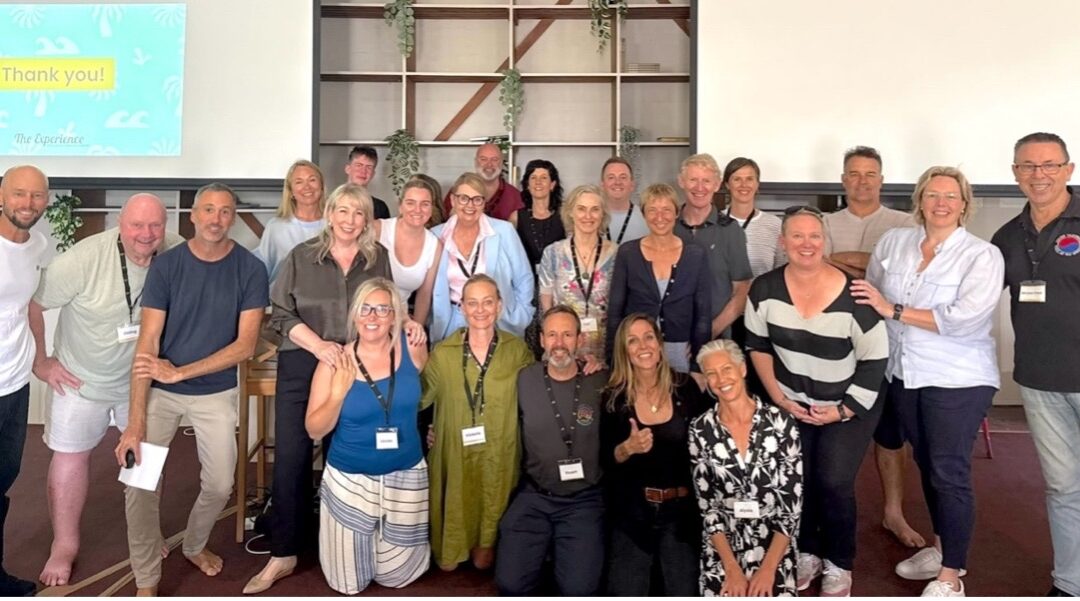
Basic Bananas Experience Bunch
Experiences come in all shapes and forms, and in all sorts of places. At the Basic Bananas Business and Marketing Experience, I found myself wondering who I might bump into on my way to the bathroom late at night!
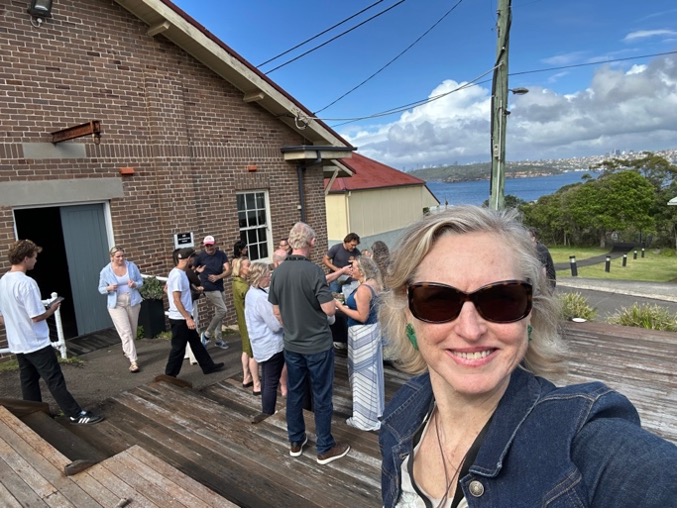
We were at Q Station, the old quarantine station at North Head in Manly. It’s a place that holds many stories and memories. Given its ghostly reputation, I found myself having a little conversation with some of these particular residents. Maybe I’m superstitious but I felt it was appropriate to show respect and acknowledge their experiences of this unique place.
This is my second time at The Experience, where small business owners are invited to take some time out and work on their businesses. Franziska Iseli and Christo Hall, the founders of Basic Bananas, are great at keeping things grounded, human and very real. This year’s theme was The Future is Human, and while we spent a fair amount of time discussing AI and the tech tools that might help small and micro businesses, there was just as much room for the human side of things. As it was a conference, we got to spend time together in person, hear how others were doing and share what we were each figuring out in our businesses.
In my session, I invited the group to play Zombie Chair, an improv game that felt rather fitting at an old (possibly haunted) quarantine station in New South Wales. It didn’t take long to see how rushing to fill one gap can leave another one open. Sound familiar?
Experiences come in all shapes and forms, and in all sorts of places. At the Basic Bananas Experience, I found myself wondering who I might bump into on my way to the bathroom late at night.
We were at Q Station, the old quarantine station at North Head in Manly. It’s a place that holds many stories and memories. Given its ghostly reputation, I found myself having a little conversation with some of its residents.
This is my second time at The Experience, where small business owners are invited to take some time out and work on their businesses. Franziska Iseli and Christo Hall, the founders of Basic Bananas, are great at keeping things grounded, human and very real. This year’s theme was The Future is Human, and while we spent a fair amount of time discussing AI and the tech tools that might help small and micro businesses, there was just as much room for the human side of things. As it was a conference, we got to spend time together in person, hear how others were doing and share what we were each figuring out in our businesses.
Not boots and all
I have mixed feelings about AI, but I’m trying out a few tools and can see how they might be useful. I’m also cautious about what I use them for and what information I give them. One idea we talked about during our conference was automating the mundane and elevating the moments. I liked that. It got me thinking about which parts of my workday I’d happily hand over and which I’d like more time for.
I’m still finding my feet with it. Some people I know have gone in boots and all. I’m taking it at my own pace, and I value learning alongside others.
The human side of business
I felt more energised when the conversation turned to the human side of running a business. We asked: How well do we know the people we work with? Who do we turn to when things aren’t going to plan? Who can we be vulnerable with? And how much attention do we give our relationships when so many other things are competing for it?
Franziska shared some of the research behind Dangerously Alive, her book about the art of showing up for your own life. Drawing on a range of life philosophies, she explored three principles that run through the book: curiosity, courage, and connection.
Dr Belinda McMahon, a vocal communication specialist, took us into the relationship between our breath, our nervous system, and how we use our voices to build trust and connection. Connection – there’s that word again.
Words matter, and how we say them affects how they’re heard. Our voices are unique to us, and we can learn to use them more flexibly. Belinda invited us to listen, adjust and observe, then keep what works and explore and test what else we can do.
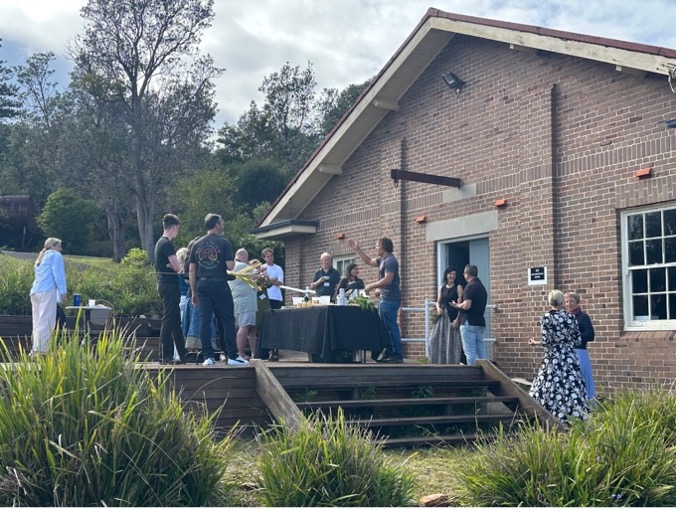
We also spent a delicious morning with Clarence Bruinsma, founder of Bush to Bowl, a 100% First Nations-owned social enterprise focused on Australian bush foods and botanicals. As Clarence introduced us to the plants and foods, we could pick them up, smell them, feel their textures, have a taste and ask questions as we went. Sharing that experience was a lovely way to connect with each other and with Country.
From shared experiences to Zombie Chair
We’d all made time to be there in person. Over meals and in the workshops, we got to know a little more about each other’s lives. I valued sharing my own experiences and hearing how others were getting on in their businesses, how they were using AI and what they were still working out.
Who ya gonna call?
I’d been invited to facilitate a session on complexity. What I heard over those couple of days shaped how I connected the session to running a small business. We often do work that would sit across several roles in a larger organisation, dealing with what’s in front of us while trying to keep an eye on the bigger picture. Our conversations made me think about who helps us see what we might be missing when we’re busy working out what to do next.
Have we put too many eggs in one basket? When things aren’t going to plan, who can we call, and who can call us? And when things go well, who do we want to share the good news with?
A zombie in the mix
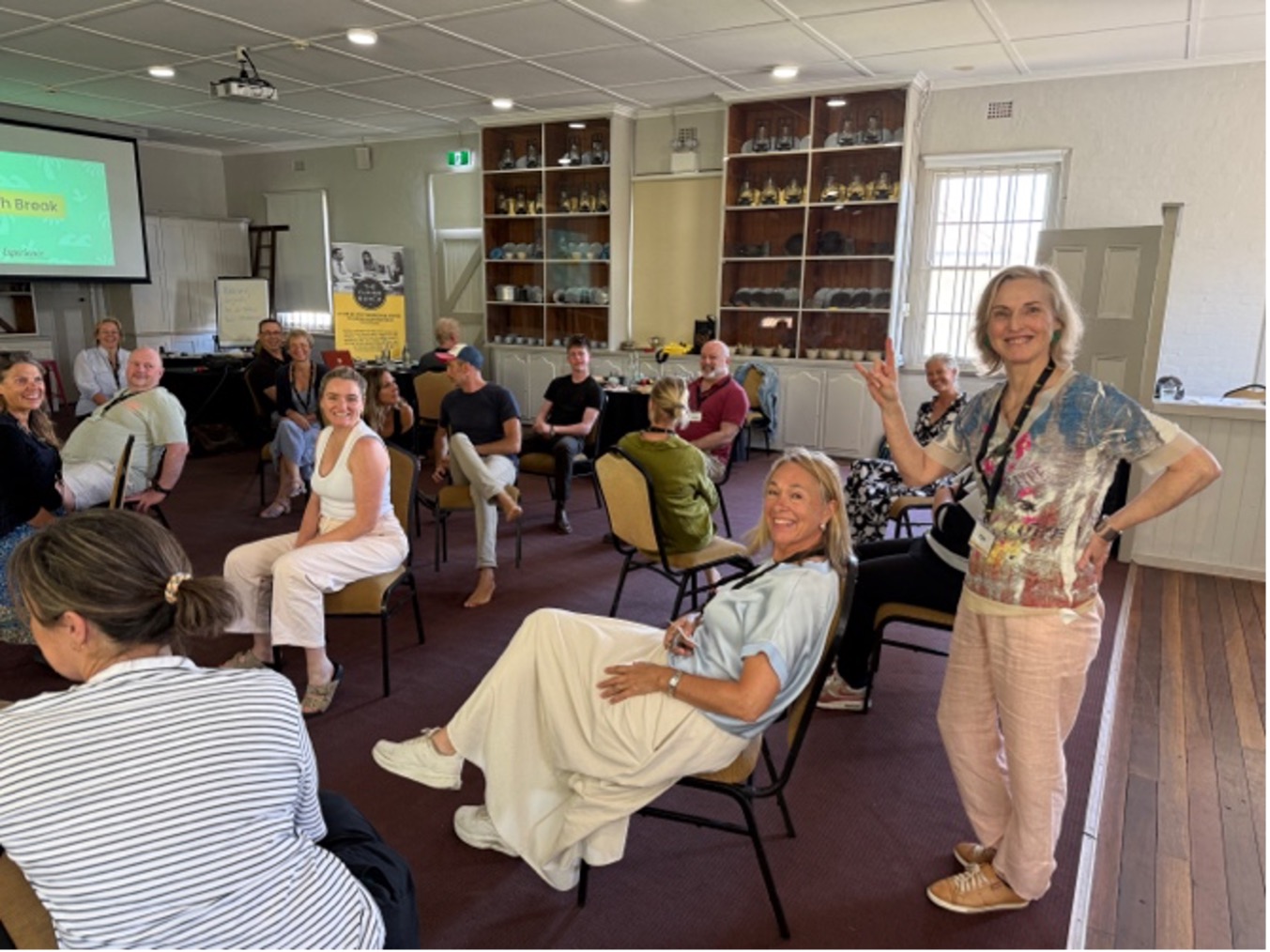
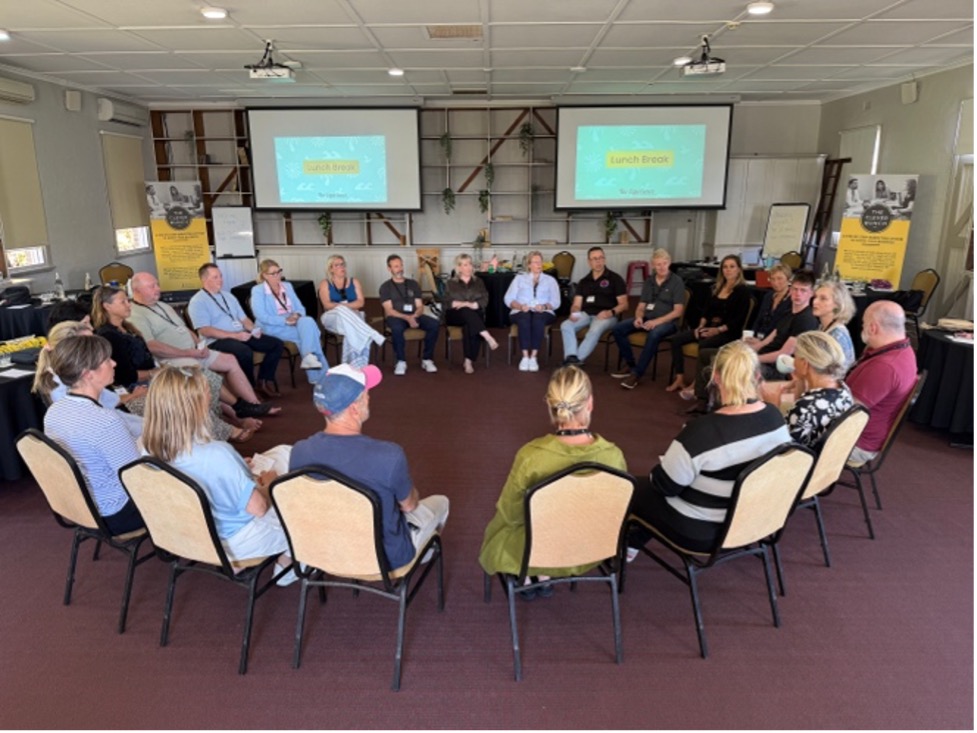
I wanted to give us a chance to explore how we respond together when things change unexpectedly. So I invited the group to play Zombie Chair, an improv game that felt rather fitting at an old quarantine station.
In a nutshell, there’s one empty chair, and the group’s job is to keep the zombie from sitting in it. Every time someone fills the gap, the chair they’ve just left becomes the new gap. A perfectly sensible move can change everyone else’s plans in an instant. Sound familiar?
We played one round in silence and another where people could talk. I wanted us to notice what it takes to respond together. Who could see something others had missed? What happened when several people tried to solve the same problem? When was it more helpful to stay put? There was plenty of fun in the room, along with a few aha moments as people connected the game to their own businesses.
If you work on your own, who helps you see something you’re missing before the problem becomes urgent? If you have a team, what do they need from you so they can respond when you may be looking in another direction?
If you’d like to try something like this to help your team connect and work well together, get in touch.
Breathing space
I can spend a morning catching up on admin and get to lunchtime realising I still haven’t called the person I meant to speak to. When you run a small business, there’s always another gap you can fill.
Franziska’s session prompted us to ask what we’d like to make time for. She also took us back to the bigger question. What made us want to start a business and take our destiny into our own hands in the first place?
If AI or another tool takes a routine task off my hands, do I fill that time with another task? I could give myself some breathing space or time to make something. I could have lunch with my husband, a friend or a colleague, go for a walk or have a swim. I could catch up with a fellow business owner and let the conversation go somewhere unexpected.
These are the things I want to keep in mind as I work out which tools to use and what to use them for. I wonder what your relationship with AI is like. What are you finding useful in your business? What are you steering away from?
The reminder I came away with is that the future is human, and connection is everything.
Check out zombie in action