
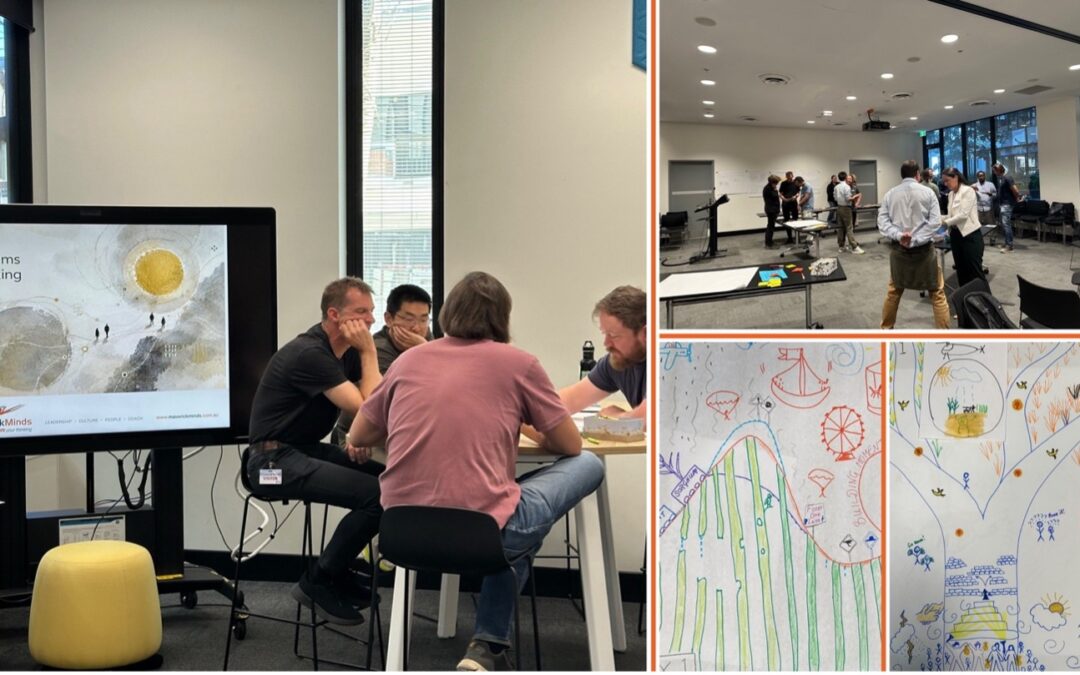
“I loved having the opportunity to get to know everyone before we dived into the nitty gritty nerdery. It helps to understand what motivated them to get involved, what they hope to achieve and how we can best work together.”
A team member shared this after a workshop I facilitated with a newly formed science project team. It marked the beginning of a multi-year research project bringing together people from different organisations, each with considerable knowledge, experience and technical expertise.
For a long-term project such as this, with this level of complexity, success requires strong foundations. So before getting into the project’s practical details, the team chose to invest time in getting to know one another and thinking about how they wanted to work together.
Over a couple of days and dinner, I used a range of creative, participatory methods to help the team explore the complexity ahead and discover who they are, both as individuals and as a team forming around a shared project, goals and outcomes.
As the project director later reflected, the workshop gave people quality time and space to think together and set priorities, and explore how they want to work together, before immersing themselves in the science itself.
Relationships are part of the work
Building relationships is often treated as separate from the real work, something to fit in before getting down to business. But time and attention given to relationships and connection are just as important as the work itself.
Leaders help create the conditions, but everyone shapes the life and culture of a team, and how the work gets done.
Over the life of a complex project, challenges will inevitably arise. What matters is whether the team has built strong foundations to navigate the terrain they find themselves in.
When people understand what motivates their colleagues, recognise the capabilities and creativity within the group, and see one another as people rather than simply roles, they have more to draw on when things become difficult. They may be better able to listen across differences, speak honestly, ask for help and work through problems together.
From my observations of the team I’ve just worked with, they have laid solid foundations for their time together. Given the length of the project, they will also need to pay attention not only to the technical side of things, but to the dynamic nature of relationships.
Here’s a question – how well do people in your team understand the motivations, creativity and capabilities behind one another’s roles?